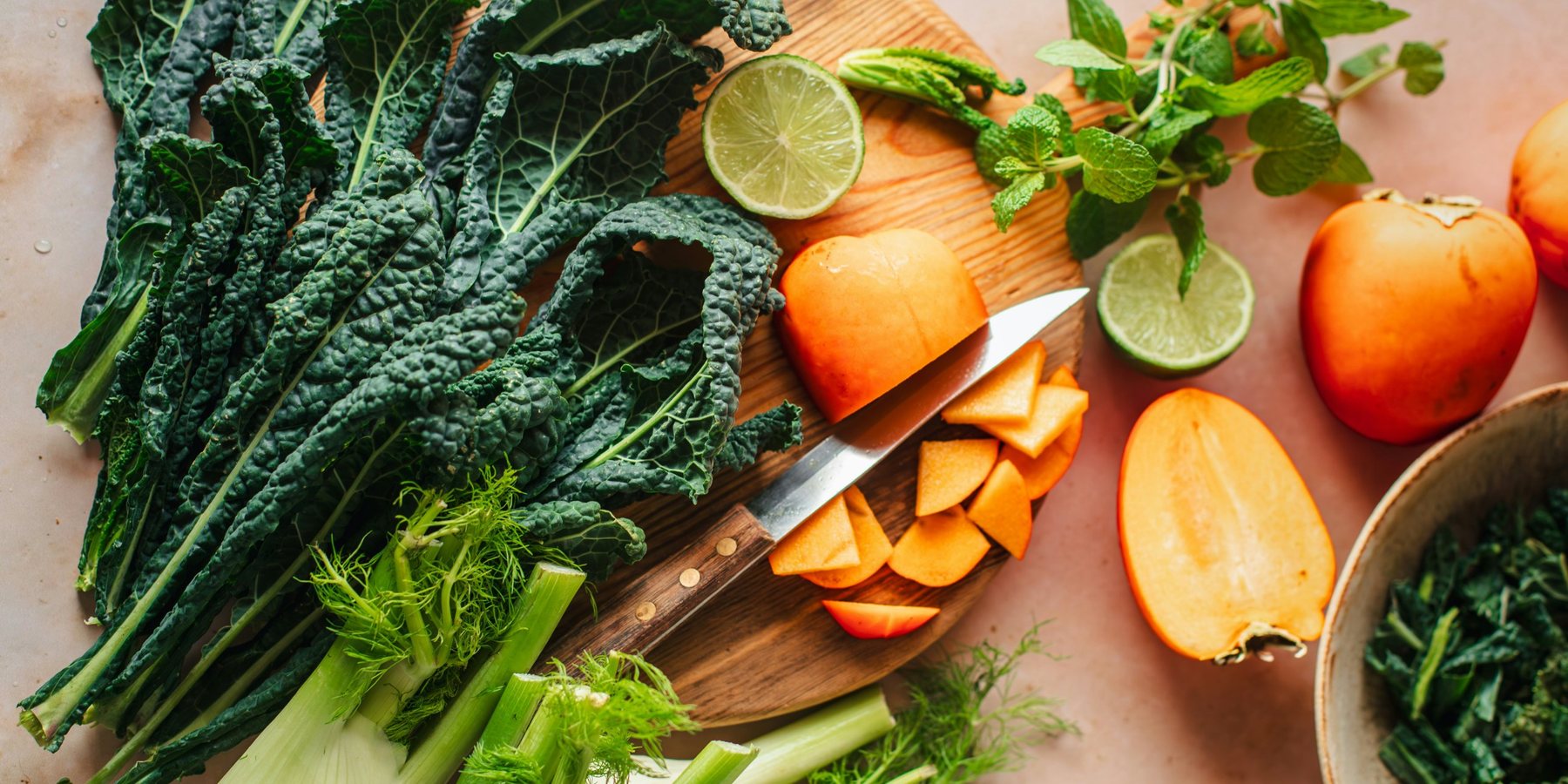
Rather than focusing on what foods to cut out, I like to start by prioritizing what to add in. It tends to be easier to sustain, and once your meals are built around vegetables, fiber and protein, there's naturally less room for low-nutrient foods.
Diversity feeds diversity
A diverse gut microbiome is associated with better metabolic health, and research increasingly links it to immune function and mood. Different microbes thrive on different plant fibers and polyphenols, so eating a wide variety of plants is the best way to build that diversity. As these microbes feed on that fiber, they produce short-chain fatty acids such as butyrate, which help fuel the cells lining your gut, support blood sugar and appetite regulation, and calm inflammation throughout the body.

What counts
Vegetables and greens
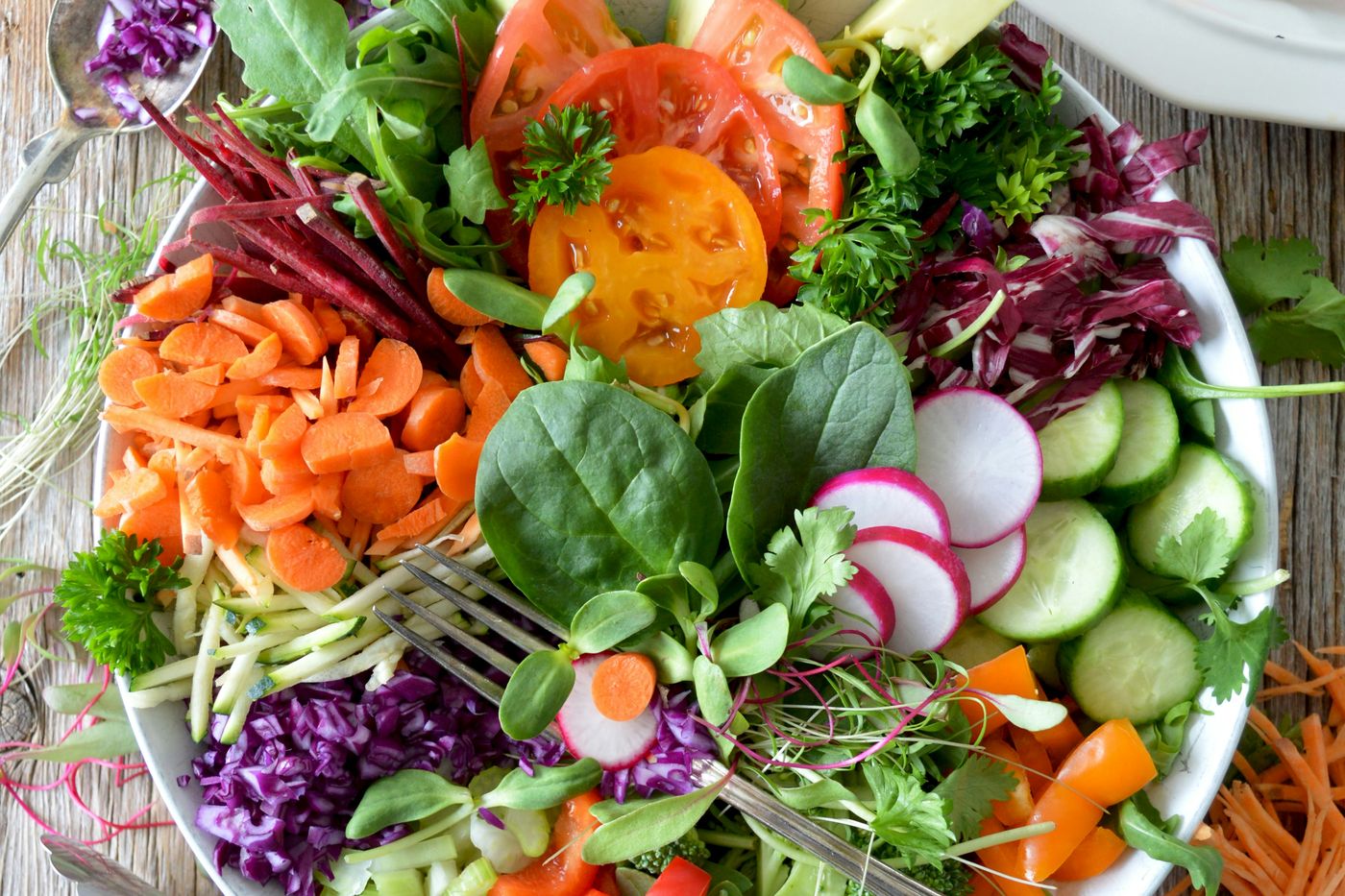
Each color brings different polyphenols.
Fruit and berries
Berries are especially rich in fiber and antioxidants.
Legumes
Lentils, chickpeas and beans, for fiber and protein.
Whole grains
Oats, barley, farro and quinoa, for fiber and B vitamins.
Nuts, seeds, herbs and spices
A trail mix can be five or six plants, and so can your spice rack.
Coffee, tea and dark chocolate
These are plants too.
Thirty may sound like a lot, but it adds up quickly. My simplest advice is to eat as many colors as you can. Fermented foods like yogurt, kefir, kimchi and sauerkraut also support a diverse microbiome. In one Stanford study, adults who ate six servings of fermented foods a day for 10 weeks had more diverse gut microbes and lower markers of inflammation.

Smoothies are one of the easiest ways to add plants and meet your protein goals early in the day. Pre-pack frozen smoothie bags, then blend one with a little milk whenever you want it. For tips and a few simple recipes, see My Smoothie Shortcut.
Fiber: closing the gap
Most of us don't eat nearly enough fiber. In a large review published in The Lancet, each additional 8 grams of fiber a day was linked to meaningfully lower rates of death from any cause, heart disease, type 2 diabetes, stroke and colorectal cancer.
Different types of fiber do different jobs. Soluble fiber, the kind that turns gel-like in water, helps lower cholesterol, steady blood sugar and keep you full. Insoluble fiber adds bulk and keeps you regular, and fiber overall supports healthy estrogen metabolism.
| Easy additions | Fiber |
|---|---|
| Chia seeds, 2 tablespoons | 8 g |
| Avocado, 1 medium | 10 g |
| Raspberries, 1 cup | 8 g |
| Black beans, ½ cup | 8 g |
| Lentils, ½ cup cooked | 8 g |
| Steel-cut oats, ¼ cup dry | 4–5 g |

What about fiber supplements? They usually provide a single type of fiber, while whole foods offer a variety of fibers along with polyphenols and micronutrients. However, supplements can be helpful when you're traveling or struggling to reach your goal, and psyllium in particular has good evidence for lowering cholesterol and blood sugar.
Go slowly. Increasing fiber too fast can cause bloating and discomfort. Add about 5 grams a week and drink plenty of water. If you have SIBO or IBS, fiber can be more complicated, and working with a trained provider can help.
Protein: most of us need more
Protein matters because muscle mass begins to decline in your 30s and speeds up with age. It also supports the production of hormones and neurotransmitters, blunts blood sugar spikes after meals and helps you feel full.
The standard recommendation of 0.8 g/kg is set to prevent deficiency, not to build and maintain muscle. For active and older adults, studies suggest 1.2–1.6 g/kg a day. As we age, our muscles become less responsive to protein, so it takes more to maintain the same muscle mass. Higher intakes also help build strength when combined with resistance training, and help protect muscle during weight loss. Getting enough is especially important on a GLP-1 medication, when appetite is lower and muscle loss is a risk.
- Aim for 30 grams per meal. This delivers enough leucine, the amino acid that signals your muscles to build. Spreading protein evenly across your meals is more effective than saving most of it for dinner.
- Pair it with strength training, as it makes your muscles more responsive to protein.
- Start with breakfast. Protein and fiber at breakfast can help steady your blood sugar, energy and appetite for the rest of the day.
Where to start
Choose one addition for the next two weeks. You might add two new plants to dinner three nights a week, swap your usual breakfast for one with 30 grams of protein, or keep a few smoothie bags in the freezer. In Part 2, we cover how you eat, blood sugar balance and intermittent fasting.
References
- McDonald D, et al. American Gut: an open platform for citizen science microbiome research. mSystems. 2018.
- Koh A, et al. From dietary fiber to host physiology: short-chain fatty acids as key bacterial metabolites. Cell. 2016.
- Wastyk HC, et al. Gut-microbiota-targeted diets modulate human immune status. Cell. 2021.
- Reynolds A, et al. Carbohydrate quality and human health: a series of systematic reviews and meta-analyses. Lancet. 2019.
- U.S. Department of Agriculture, Agricultural Research Service. Nutrient intakes from food and beverages: What We Eat in America, NHANES 2017–2018. 2020.
- Bauer J, et al. Evidence-based recommendations for optimal dietary protein intake in older people: a position paper from the PROT-AGE Study Group. Journal of the American Medical Directors Association. 2013.
- Phillips SM, Chevalier S, Leidy HJ. Protein “requirements” beyond the RDA: implications for optimizing health. Applied Physiology, Nutrition, and Metabolism. 2016.
- Morton RW, et al. A systematic review, meta-analysis and meta-regression of the effect of protein supplementation on resistance training-induced gains in muscle mass and strength in healthy adults. British Journal of Sports Medicine. 2018.
- Mozaffarian D, et al. Nutritional priorities to support GLP-1 therapy for obesity: a joint advisory from the American College of Lifestyle Medicine, the American Society for Nutrition, the Obesity Medicine Association, and The Obesity Society. American Journal of Clinical Nutrition. 2025.
- Mamerow MM, et al. Dietary protein distribution positively influences 24-h muscle protein synthesis in healthy adults. Journal of Nutrition. 2014.
- Trommelen J, et al. The anabolic response to protein ingestion during recovery from exercise has no upper limit in magnitude and duration in vivo in humans. Cell Reports Medicine. 2023.
- Mitchell WK, et al. Sarcopenia, dynapenia, and the impact of advancing age on human skeletal muscle size and strength; a quantitative review. Frontiers in Physiology. 2012.
This article is for general education and isn't a substitute for personal medical advice. Please talk with your own clinician before changing your medications, supplements, diet or exercise routine.